Latest Blog

Why Your Yard Turns Into a Swamp Every Time It Rains

Is your yard still holding water after a storm? Learn what causes yard flooding and which drainage, grading, and erosion solutions can actually fix it...

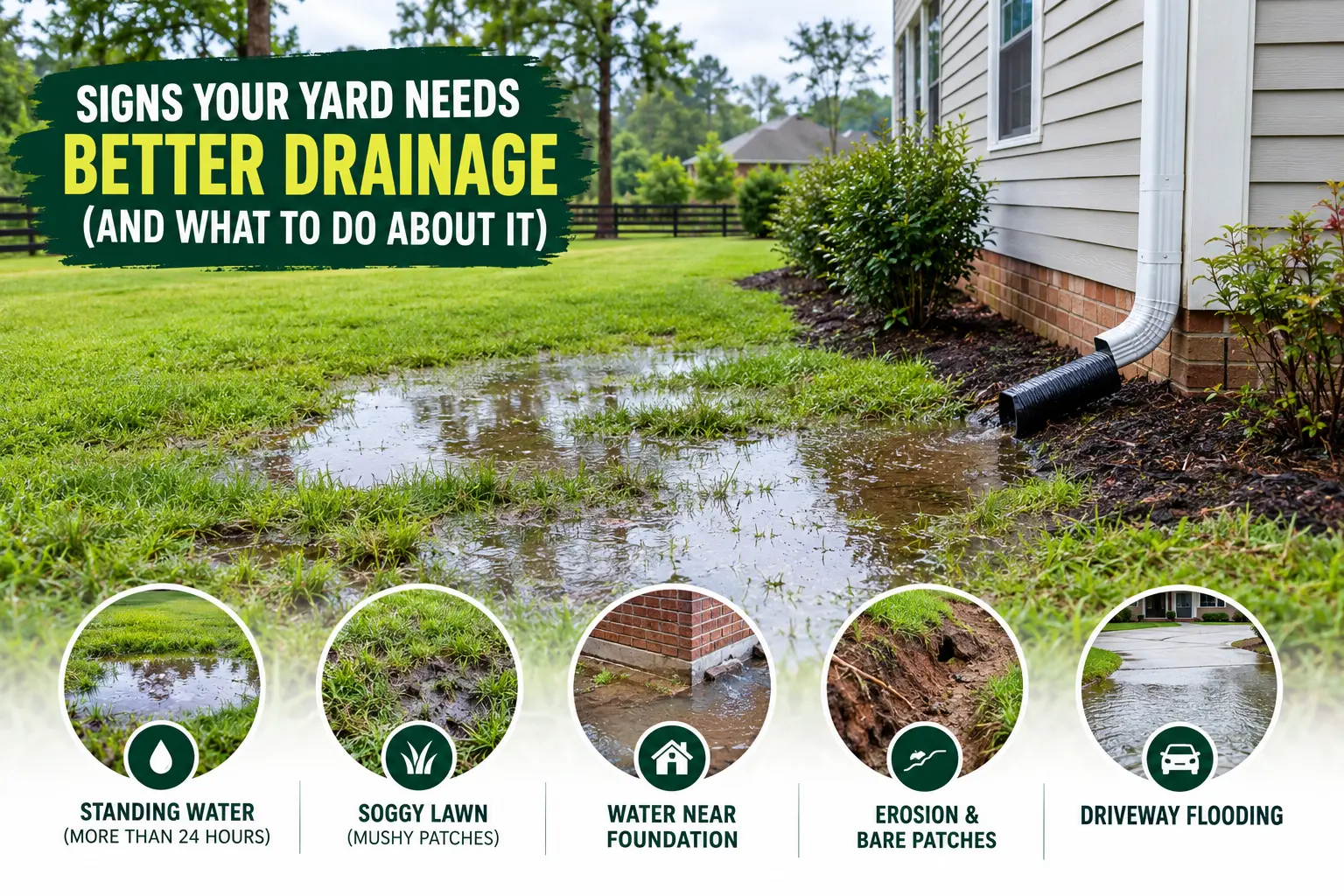
Signs Your Yard Needs Better Drainage

Every time it rains hard for more than a day, someone calls us asking the same basic question: “There’s a pond in my backyard again — is that normal?” Sometimes, yeah, kind of. Most of the time, no. And there’s usually a reason you can actually point to. Here’s the thing about northeastern NC — it just doesn’t drain the way people think it should. We’ve got flat land, clay soil, and a lot of rain coming off the coast. Put those three together and water sits around here way longer than it would if you lived up in the Piedmont. That doesn’t mean your yard’s doomed to be a swamp forever, though. Nine times out of ten it just means the grading or the drainage setup isn’t doing what it’s supposed to.

LITTLE RED TRACTOR

Signs Your Yard Needs Better Drainage (And What to Do About It)

So let’s get into it

what to look for, and what usually ends up fixing it.

Why This Happens

Ask anybody who’s lived in Hertford, Camden, Currituck, Edenton or Elizabeth City a while and they’ll tell you — the soil doesn’t soak up water fast. It’s heavy. Clay-heavy in a lot of yards we’ve worked in. And since the land’s so flat, water just kind of… sits. Doesn’t have anywhere to go. Throw a tropical storm at it, or even just three or four straight days of rain, and those low spots turn into little lakes real quick.

A little puddling

Now, a little puddling right after a storm? That’s nothing. Every yard does that. What we’re actually talking about is this stuff:

Soft or spongy patches

Then there’s the soft spots. Spongy ground that stays wet for days after it rains — you’ll feel it under your boots when you’re mowing. Leave it alone too long and it starts killing grass roots underneath, and come summer you’ve basically grown yourself a mosquito farm.

What Actually Fixes It

There isn’t one universal fix — it really does depend on your property. We’ve seen two houses on the same street need completely different solutions because of how the land sits. That said, most of what we install falls into one of these categories:

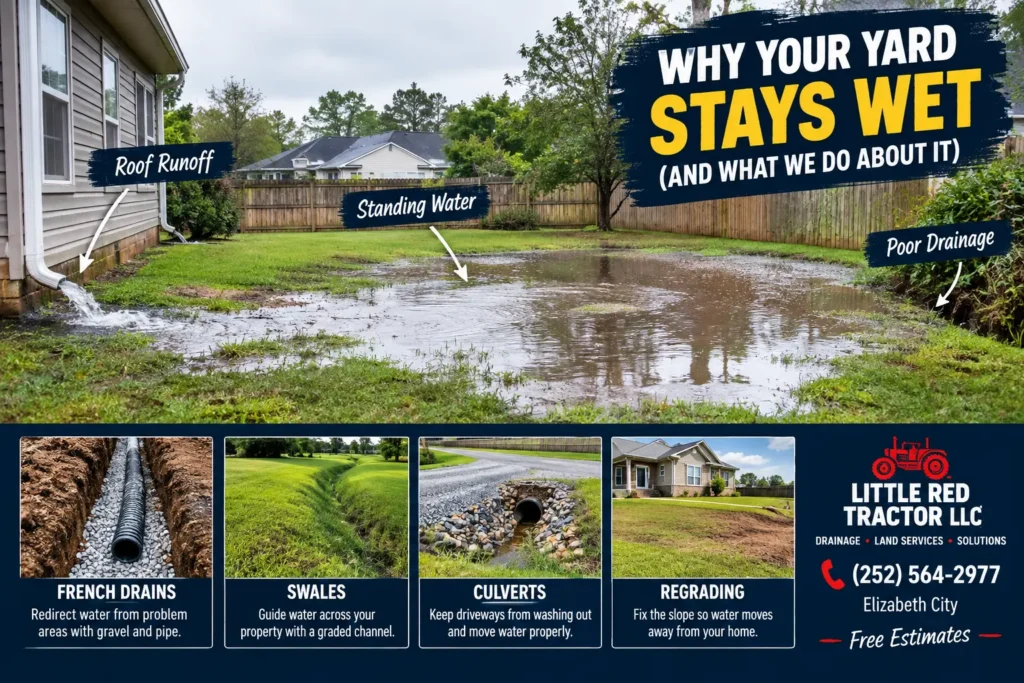
French drains. A buried, perforated pipe that pulls water away from a problem area usually near a foundation and routes it somewhere safer. Swales. Shallow graded channels that guide surface runoff toward a drainage point instead of letting it collect in your yard. Regrading. Sometimes the issue isn’t a missing drain at all, it’s that the yard itself slopes the wrong way. Fixing the slope solves the problem without adding any hardware. Soil conditioning. Improving how the ground absorbs water instead of letting everything run across the top of it. Culverts. Used where water needs to pass under a driveway or path rather than pool up against it. Honestly, most of the yards we work on end up needing two of these together  a regrade plus a French drain is a pretty common combo, especially for houses close to the water table.

Don’t Wait On This One

Drainage problems have a way of getting worse quietly. A soft patch of grass this year can turn into foundation trouble in two or three years if nobody deals with it. We’ve walked into jobs where a $500 fix five years ago would’ve prevented a $5,000 fix today. It’s just cheaper and easier to catch it early.

Want Us to Take a Look?

We’ve been doing this work across Hertford, Camden, Currituck, Edenton, and Elizabeth City for a while now, and honestly, drainage issues are one of the more common calls we get. If you’re seeing any of the signs above, it’s worth having someone walk the property and tell you straight what’s going on — not just sell you a fix.

Get a free estimate here or give us a call at (252) 564-2977. Doesn’t cost anything to ask.

Frequently Asked Questions

How much does a French drain cost to install?
It really depends on how long the drain needs to be, how deep it has to go, and what the soil’s like where you are. We’d rather come look and give you a real number than guess over the phone.
For small surface stuff, maybe — some homeowners have luck just regrading a small area themselves. But anything near your foundation, or anything involving erosion control, is worth having a professional take a look at first. It’s easy to make it worse without meaning to.
Swales are for surface water moving across your yard. French drains handle water that’s already below the surface or collecting close to the house. A lot of properties need both, working together.

Usually not, unless it’s directly tied to a specific storm event that’s already covered under your policy. That’s part of why it makes sense to deal with drainage before it becomes a bigger issue.

Clearing Land in Northeastern NC: What I Tell Folks Before We Start

Clearing Land in Northeastern NC: What I Tell Folks Before We Start

Latest Blog Stump Grinding & Site Prep: Don’t Let the Stump Be an Afterthought People call us about clearing for…

Stump Grinding & Site Prep: Don’t Let the Stump Be an Afterthought

Stump Grinding & Site Prep: Don’t Let the Stump Be an Afterthought

Latest Blog Stump Grinding & Site Prep: Don’t Let the Stump Be an Afterthought Most people think the tree is…
Why Your Yard Stays Wet (and What We Do About It)

Why Your Yard Stays Wet (and What We Do About It)

Latest Blog Why Your Yard Turns Into a Swamp Every Time It Rains Is your yard still holding water after…

Scroll to Top